
Stowage plans that follow the port rotation
Every container has a port, a weight and a place in the stack. Our models plan the stowage with port order, weight and stability solved at once: last port at the bottom, first port on top, heavy containers low. The ship sails full, sits level, and at every port the right containers are on top.
Ship loading · 59 s
Every restow is a crane move you pay for twice
Stowage is often planned under time pressure, stack by stack, with port order, weight and stability checked one after the other. Containers for an early port end up under cargo for later ports, and heavy boxes end up high. At the next port the cranes dig: lift, park on the quay or in another bay, and lift again.
It costs crane moves and berth time at every port, longer turnarounds, ships that sail below capacity when planners play it safe, and stability margins that are hard to see in advance.
Restows at every port
Containers for the current port sit under cargo for later ports, so the crane lifts, parks and reloads before the real work starts.
Weight in the wrong place
Heavy containers stowed high or unevenly cost stability and trim, and correcting it late means reworking the plan.
Space traded for safety
Loading port by port with gaps keeps every box in reach, but the ship sails part-empty and the rest of the cargo waits for another sailing.
Port order, weight and stability, solved at once
We compute the stowage plan for the whole voyage: which container goes in which bay, row and tier, given every port it calls at and every limit the ship has to respect.
What goes in
- The port rotation and the containers for each port
- Container weights, sizes and types, including special cargo
- The ship's bay layout and stack weight limits
- Containers already on board from earlier ports
Constraints handled
- Port order: the next port on top, later ports below
- Stack weights, with heavy containers stowed low
- Stability and trim within the ship's limits
- Rules for special cargo and segregation
What the planner sees
- A stowage plan per bay, row and tier
- Expected restows and crane moves per port, side by side with the current plan
- Weight distribution and trim, before the first box is lifted
- Containers that cannot be stowed within the rules, named up front
Measured on your voyages, not promised up front
We do not quote restow or turnaround figures before we have seen your cargo and rotations. In a shadow run, our stowage plans run beside your current planning on the same voyages, and you compare the numbers that matter to your operation.
These are the measures a shadow run compares. Outcomes depend on your ships, rotations, cargo and data, and are not guaranteed.
- Restows per port
- Compared with today, port by port
- Crane moves and turnaround
- Compared on the same voyages
- Utilisation, stability and trim
- Checked for every plan
The same puzzle, on land
 Load & fill optimizationThe same 3D problem for trucks and containers: every item placed by weight, stacking rules and delivery order.Explore load & fill optimization
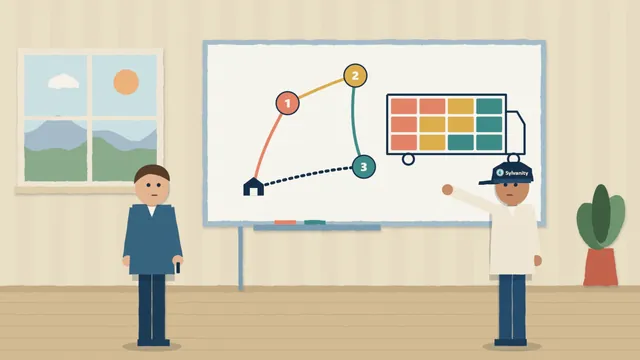 Route and load, planned togetherWhy the order of the stops and the order of the load have to be planned as one problem.Explore route and load, planned together
Bring one planning problem to a working session
Tell us where planning hurts today. In one session we map it to the modules that fit, and what a shadow run on your data would look like.
Schedule an appointment
Real-time availability. Instant Teams invite.
- Direct with our engineers
- Cancel or reschedule any time