
Plan next week on a forecast, not a guess
Seasons, holidays and promotions make some days calm and others a storm. Our models forecast demand per depot, customer and day, show how certain each forecast is, and turn it into the trucks, loads and staff you plan for. Your planners review it before anything is committed.
Demand forecasting · 1 min
The same trucks and the same team, whatever the day brings
Many operations plan next week from last week, a rule of thumb or a spreadsheet. Seasons, holidays and promotions shift volumes from day to day, so the plan is right on average and off on most days. Planners find out on the day itself, when there is little left to change.
On quiet days that means idle trucks, idle hours and stock that piles up; on busy days, empty shelves, orders that wait, and extra capacity booked at the last minute at a premium.
Quiet days, paid at full capacity
Trucks stand idle and teams wait, while stock ordered for a busier day takes up space.
Peak days that catch you out
Holidays and promotions bring more volume than the plan allowed for: shelves run empty and orders wait.
A single number nobody trusts
A forecast with no sense of its uncertainty leaves planners guessing how much buffer to keep.
Forecasts that feed the plan
Models trained on your own history forecast demand at the level you plan at and pass it straight into route, load and staff planning, with the uncertainty attached and the planner reviewing.
What goes in
- Order history per depot, customer and product group
- Your calendar: holidays, promotions and planned events
- Seasonal patterns and known trends in your volumes
- External signals such as the weather, where they help
What the model accounts for
- Seasonality by week, month and year
- Holidays, peak days and the effect of promotions
- Regional differences and differences per customer
- How far each forecast can be trusted: a band, not a single number
What the planner sees
- Forecasts per depot, customer and day, with their uncertainty band
- Days that stand out, flagged before the week starts
- A capacity proposal: vehicles and staff per day
- Room to adjust the forecast with what only your team knows
Measured on your history, not promised up front
We do not quote accuracy figures before we have seen your data. In a shadow run, we forecast weeks from your history that the model has not seen, and compare forecast and plan with what actually happened, side by side with your current method.
These are the measures a shadow run compares. Outcomes depend on your volumes, history and data, and are not guaranteed.
- Forecast accuracy
- Compared with your current method
- Idle and missing capacity
- Compared day by day
- Peak days
- Checked against what happened
From forecast to plan
 Route optimizationThe forecast sets the fleet and staff for the week; route optimization turns the orders into routes that respect every rule.Explore route optimization
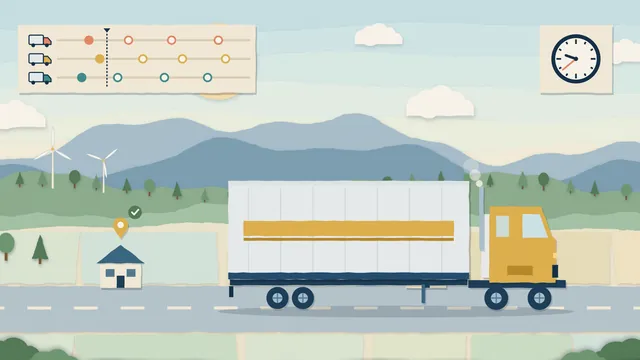 Real-time replanningForecasts prepare the week; real-time replanning handles what still changes on the day.Explore real-time replanning
Bring one planning problem to a working session
Tell us where planning hurts today. In one session we map it to the modules that fit, and what a shadow run on your data would look like.
Schedule an appointment
Real-time availability. Instant Teams invite.
- Direct with our engineers
- Cancel or reschedule any time